Quick answer
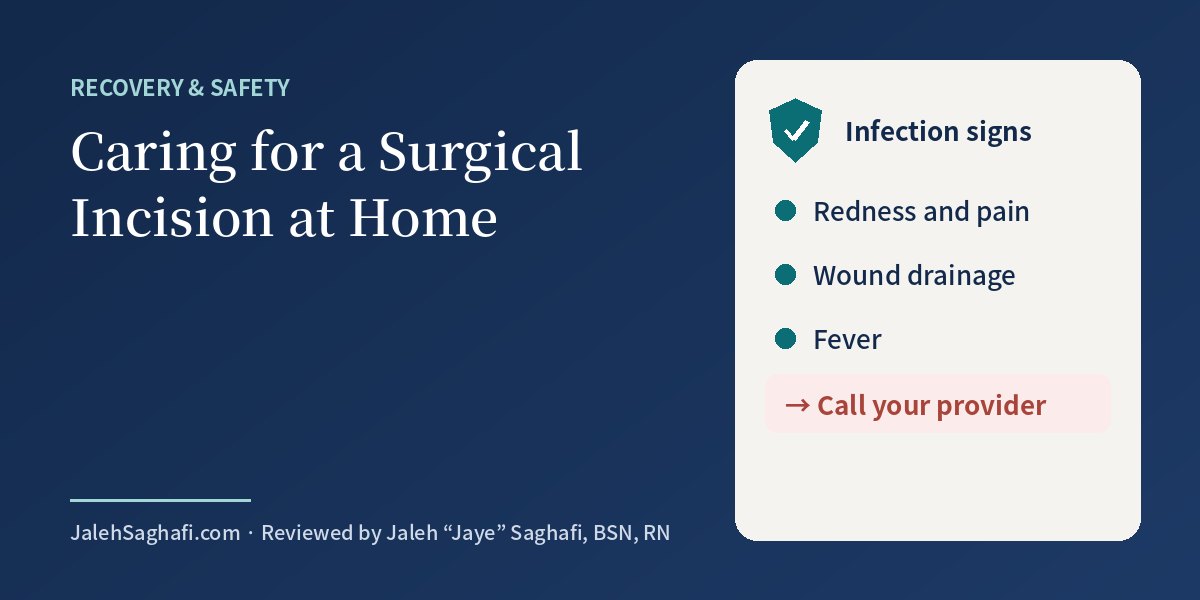
The main warning signs of a surgical site infection are redness and pain around the incision, drainage from the wound, and fever. If you notice any of these after you get home, call your surgeon or healthcare provider right away. To lower the risk, clean your hands before and after caring for the incision. Do not let family or visitors touch the wound or dressing, and follow the wound-care instructions you were given before discharge.
Most people who have surgery heal without an infection. But an infection at the surgical site is a known risk. Many of the habits that prevent it are simple things patients and caregivers do at home. This guide follows the recommendations of the U.S. Centers for Disease Control and Prevention (CDC). It is not a substitute for the specific instructions your own surgical team gives you.
What is a surgical site infection?
A surgical site infection (SSI) is an infection that occurs after surgery in the part of the body where the surgery took place. Some affect only the skin. Others are more serious and involve tissue under the skin, organs or implanted material. Most can be treated, often with antibiotics, and treatment works best when the infection is caught early.
Warning signs to watch for
| Sign | What to look for | What to do |
|---|---|---|
| Redness and pain | Redness around the incision, or pain at the site that is getting worse instead of better | Call your surgeon or provider |
| Drainage | Fluid coming from the wound, especially if it is cloudy | Call your surgeon or provider |
| Fever | A temperature above what your team told you to watch for | Call your surgeon or provider |
The CDC’s advice is direct: if you have any symptoms of an infection, such as redness and pain at the surgery site, drainage or fever, call your healthcare provider immediately. Before you leave the hospital or surgery center, ask exactly which temperature and which changes should prompt a call, and write down the phone number to use, including after hours.
Everyday incision care: a checklist
- Clean your hands first. Wash with soap and water, or use an alcohol-based hand rub, before and after you touch the incision or change a dressing.
- Follow your discharge instructions exactly. They tell you when you can shower, how to clean the area, and when and how to change dressings. Instructions differ by procedure.
- Keep hands off the wound. Family and friends should not touch the incision or the dressing.
- Ask visitors to clean their hands before and after they visit you.
- Don’t add products the team didn’t recommend, such as ointments or powders, without asking first.
- Look at the incision every day, ideally at the same time and in good light, so you notice changes early.
- Keep a simple log. Note the date, your temperature and how the incision looks. A daily photo can help you and your provider compare.
Before you leave the hospital or surgery center
The CDC recommends two checks before discharge:
- Make sure you understand how to care for your wound. Ask the nurse to show you, then explain it back in your own words.
- Make sure you know who to contact if you have questions or problems.
Teaching patients and families these steps is a core part of post-anesthesia (PACU) and perioperative nursing. Jaleh “Jaye” Saghafi, BSN, RN, did this work at Avon Surgery Center and at EMH Regional Medical Center. Read about her infection control work, including a quality initiative that raised compliance from 30% to 100%.
If you have surgery coming up
Some steps before surgery also lower the risk of infection. According to the CDC:
- Tell your healthcare provider about other medical problems, such as allergies, diabetes or obesity, which could affect your surgery and treatment.
- If you smoke, talk with your provider about quitting before surgery. Patients who smoke get more infections.
- Do not shave near where you will have surgery. Shaving with a razor can irritate the skin and make infection more likely.
- Speak up if anyone tries to shave the surgical area with a razor, and ask why.
- If you do not see a healthcare provider clean their hands, it is OK to ask them to.
Medications after surgery
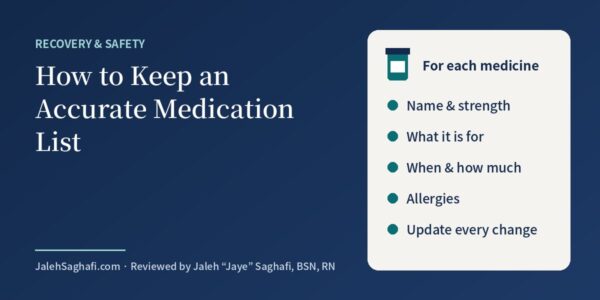
You may go home with new prescriptions, such as pain medication or antibiotics. Add each one to your medication list and take it exactly as directed. Do not stop an antibiotic early unless your provider tells you to. See how to keep an accurate medication list.
Seek emergency care for severe symptoms such as trouble breathing, chest pain, confusion or fainting. Call 911.
Key takeaways
- Watch for redness, pain, drainage and fever, and call your provider right away if you notice them.
- Clean your hands before and after touching the incision.
- Visitors should not touch the wound, and should clean their hands.
- Before discharge, make sure you understand your wound care and know who to call.
Sources
- Centers for Disease Control and Prevention, Surgical Site Infection Basics