Quick answer
Cardiac rehabilitation is a medically supervised program that helps people recover after a heart attack, heart surgery or certain other heart conditions. It combines exercise prescribed by a physician with education about heart-healthy living and counseling. Medicare Part B covers it for qualifying conditions, including a heart attack in the last 12 months, coronary bypass surgery, stable angina, valve repair or replacement, angioplasty or stenting, heart or heart-lung transplant, and stable chronic heart failure.
After a heart event, many people are unsure how much activity is safe, which habits matter most and how to cope with the worry that can follow. Cardiac rehabilitation (often called “cardiac rehab”) is designed to answer those questions in a structured, supervised way. This guide explains what happens in a program, who qualifies and how to get started.
What cardiac rehab includes
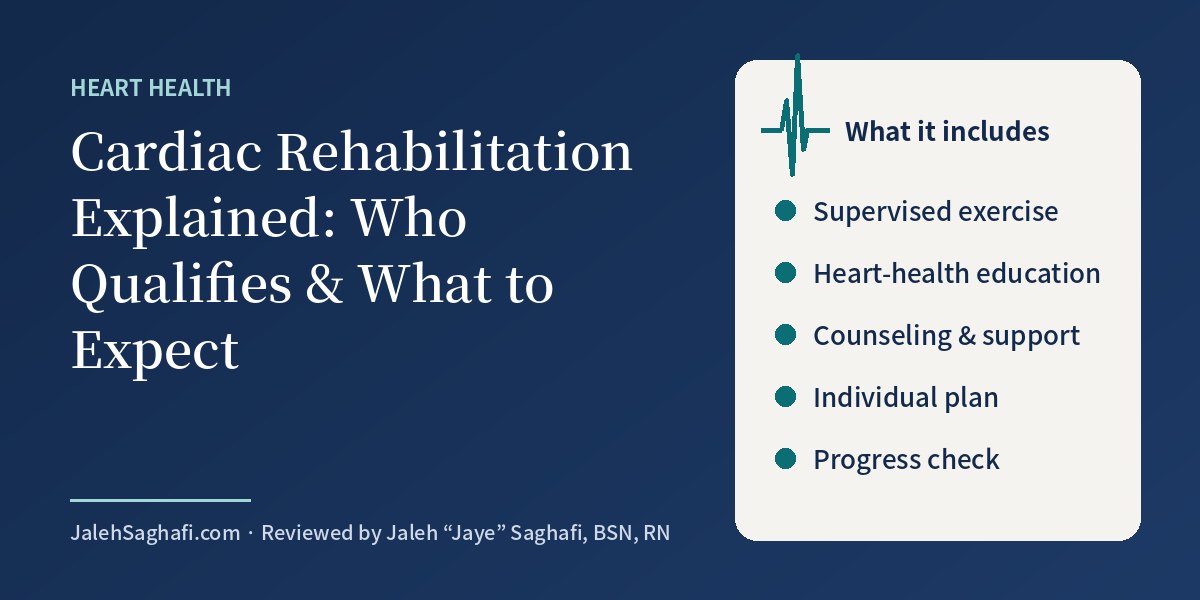
Under Medicare’s conditions of coverage, a cardiac rehabilitation program must include these parts:
| Component | What it means for you |
|---|---|
| Physician-prescribed exercise | Supervised aerobic exercise combined with other types, such as strengthening and stretching, set at a level that is safe for your heart. |
| Risk factor education and counseling | Help with habits that affect heart health, such as eating, activity, smoking and managing other conditions. |
| Psychosocial assessment | Attention to stress, mood, and your family and home situation, all of which affect recovery. |
| Outcomes assessment | Measurements at the start and end of the program so you and your team can see progress. |
| Individualized treatment plan | A plan set up for you by a physician and reviewed regularly. |
A physician supervises the program, and sessions take place in a physician’s office or a hospital outpatient setting.
Who qualifies
Medicare.gov lists these qualifying conditions for Medicare Part B coverage. You need at least one:
- A heart attack in the last 12 months
- Coronary artery bypass surgery
- Stable angina (chest pain)
- Heart valve repair or replacement
- Coronary angioplasty or coronary stenting
- Heart transplant or heart and lung transplant
- Stable chronic heart failure
Private insurance and Medicare Advantage plans set their own rules. Medicare Advantage plans must cover at least what Original Medicare covers. Check with your plan before you enroll.
How long a program lasts
According to a Centers for Medicare & Medicaid Services fact sheet, standard cardiac rehab can include up to two one-hour sessions a day, for up to 36 sessions over as long as 36 weeks. More sessions may be approved in some cases. Intensive cardiac rehabilitation (ICR) programs are more rigorous. They can include up to 72 one-hour sessions over as long as 18 weeks. Many people attend a few sessions a week. Your program will set a schedule that fits your condition.
What it costs under Medicare
For cardiac rehab in a doctor’s office, Medicare.gov says you pay 20% of the Medicare-approved amount after you meet the Part B deductible. In a hospital outpatient setting, you pay the hospital a copayment. Your actual cost depends on other insurance, the type of facility and other factors, so ask the program for an estimate.
What a first visit is like
- Referral. Your cardiologist or another physician refers you. If no one has mentioned cardiac rehab and you have a qualifying condition, ask about it.
- Intake assessment. The team reviews your history, medications and goals, and often measures your exercise capacity.
- Your plan. You receive an individualized plan for exercise, education and support.
- Supervised sessions. Staff watch how your body responds to exercise and adjust the plan as you get stronger.
- Re-assessment. At the end, the team measures your progress and helps you continue on your own.
Questions to ask before you start
- Do I have a qualifying condition, and will you send the referral?
- Is there a program near my home or work, and what days and times does it run?
- How many sessions will I need, and what will my insurance cover?
- Should I take my usual medications before exercise sessions?
- Which symptoms during exercise mean I should stop and tell staff?
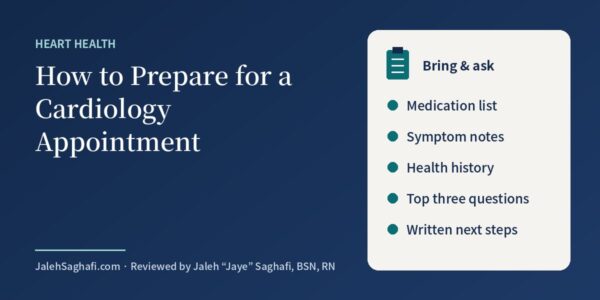
Bring your medication list to the intake visit (see how to keep an accurate medication list). The cardiology appointment checklist can help you raise cardiac rehab with your doctor.
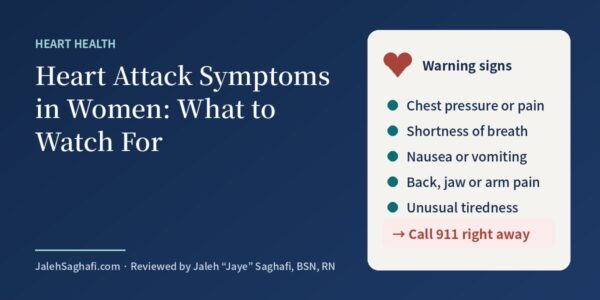
Know the warning signs. Chest discomfort, shortness of breath, cold sweat, nausea or lightheadedness can signal a heart attack. Call 911. See heart attack symptoms in women.
This article was reviewed by Jaleh “Jaye” Saghafi, BSN, RN, whose experience includes the Cardiovascular ICU and transplant unit at Cleveland Clinic. Learn more about her cardiovascular nursing background.
Sources
- Medicare.gov, Cardiac rehabilitation programs
- Centers for Medicare & Medicaid Services, Overview of the Conditions of Coverage for Medicare Part B Outpatient Cardiac Rehabilitation Services (MLN fact sheet)