Quick answer
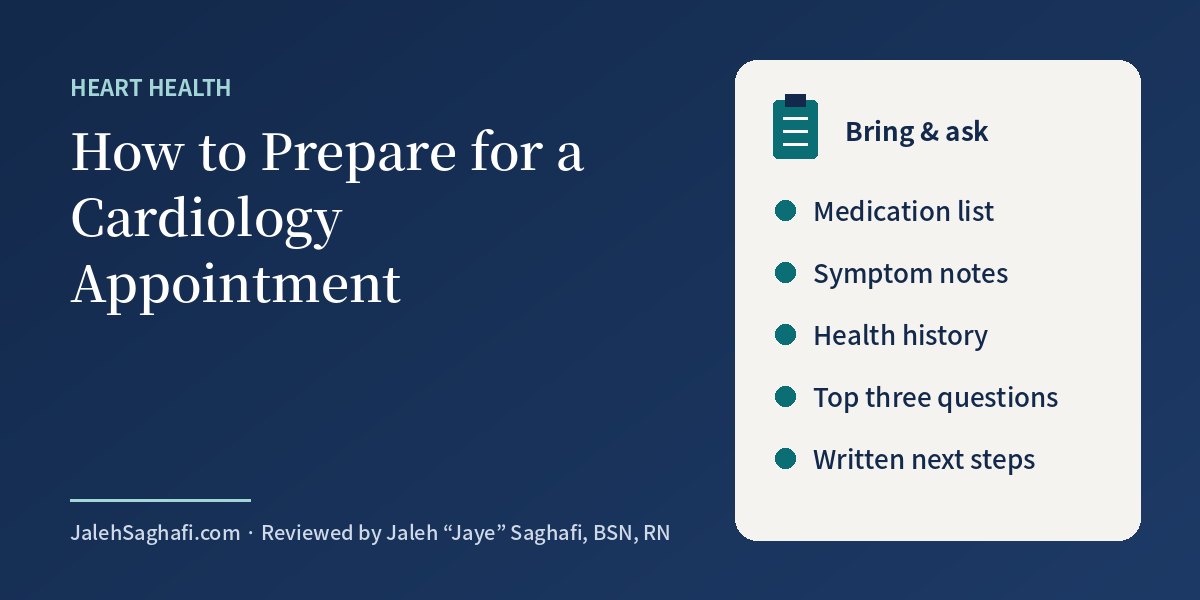
To prepare for a cardiology appointment, bring a complete list of your medications and supplements, and write down your symptoms in detail. Have your medical history ready, and write down your top three questions. During the visit, ask what any test will show, what your diagnosis means, and how and when to take each medication. Before you leave, get the next steps in writing.
Cardiology visits can move quickly. In 15 or 20 minutes you may hear about test results, new medications and lifestyle changes, often in unfamiliar terms. A little preparation helps you get clear answers and leave knowing exactly what to do next. This checklist draws on patient guidance from the Agency for Healthcare Research and Quality (AHRQ) and the National Institute on Aging (NIA).
Before the appointment: a checklist
- Medication list or bag. Bring every prescription and non-prescription medicine, plus vitamins and supplements, or a current written list. AHRQ specifically suggests including items such as aspirin, antacids and herbal supplements. (See how to keep an accurate medication list.)
- Symptom notes. Write down what you feel, when it started, how often it happens, how long it lasts, and what makes it better or worse.
- Health history. Current conditions, past surgeries and procedures, hospital stays, allergies and any family history of heart disease.
- Records from other providers. Recent test results, discharge papers, or a list of other doctors you see.
- Home readings. If you check your blood pressure, heart rate or weight at home, bring the log.
- Your top three questions. AHRQ suggests deciding in advance which three questions you most want answered.
- A support person, if you would like one, to take notes and help you remember.
How to describe your symptoms
The NIA suggests asking yourself these questions before the visit:
- What exactly are my symptoms?
- Are they constant? If not, when do I have them?
- Does anything I do make them better or worse?
- Do they affect my daily activities? Which ones, and how?
Concrete details help. “I get short of breath after one flight of stairs, and that started in the spring” is much more useful to a cardiologist than “I’ve been tired.”
Questions to ask during the visit
About tests
- Why is this test being done, and what will it show?
- How do I prepare? Will it hurt?
- How and when will I get the results?
About your diagnosis
- What is the name of my condition, and what may have caused it?
- How will it affect my daily life? Is it permanent?
- How is it treated or managed, and how can I learn more?
About medications
- What is this medicine for, and when exactly should I take it?
- What are the common side effects, and which ones should I report?
- Is it safe with my other medicines, vitamins and supplements?
- Is there a generic or less expensive option?
About treatment choices
- What are my options, and what are the risks and benefits of each?
- How soon does treatment need to start, and how long will it last?
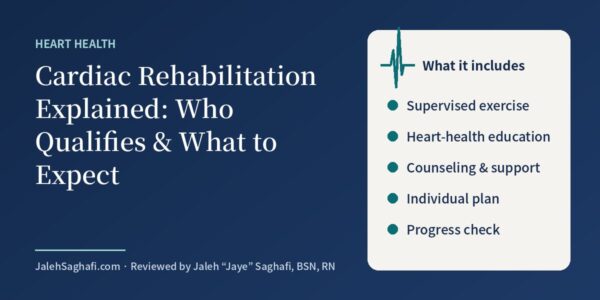
- Would cardiac rehabilitation help me?
Make sure you understood
A simple technique is to repeat back, in your own words, what you think the doctor said, then ask, “Is that right?” The NIA recommends this kind of check. If a word is unfamiliar, it is fine to say, “I don’t understand that word. What does it mean?” Clinicians would much rather explain twice than have a patient leave unsure.
Before you leave
- Get written instructions for any new medication or change in dose.
- Confirm when your next appointment or test is.
- Ask who to call with questions, and which symptoms mean you should call right away.
- Ask for any recommended brochures, videos or websites.
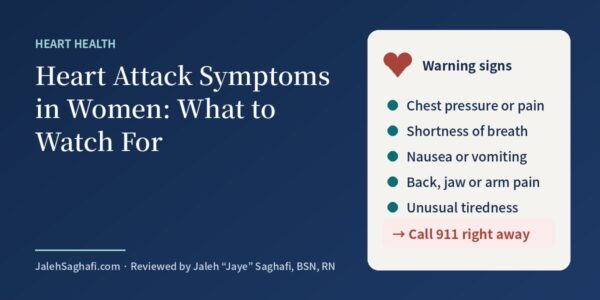
Do not wait for your appointment if you have heart attack warning signs. Chest discomfort, shortness of breath, or pain in the arms, back, neck, jaw or stomach can be signs of a heart attack. Call 911 right away. Read heart attack symptoms in women.
Why this matters
Clear communication between patients and their care team is the core of safe care. It is a theme that runs through Jaleh “Jaye” Saghafi’s nursing career, from educating cardiovascular patients and families at Cleveland Clinic to explaining medications to infusion patients today. Read more about her approach to clinical and patient education.
Sources
- Agency for Healthcare Research and Quality, Be More Engaged in Your Healthcare
- National Institute on Aging, What Do I Need to Tell the Doctor?
- National Institute on Aging, What Should I Ask My Doctor During a Checkup?
- National Institute on Aging, Discussing Health Decisions with Your Doctor